 Lebanese Republic


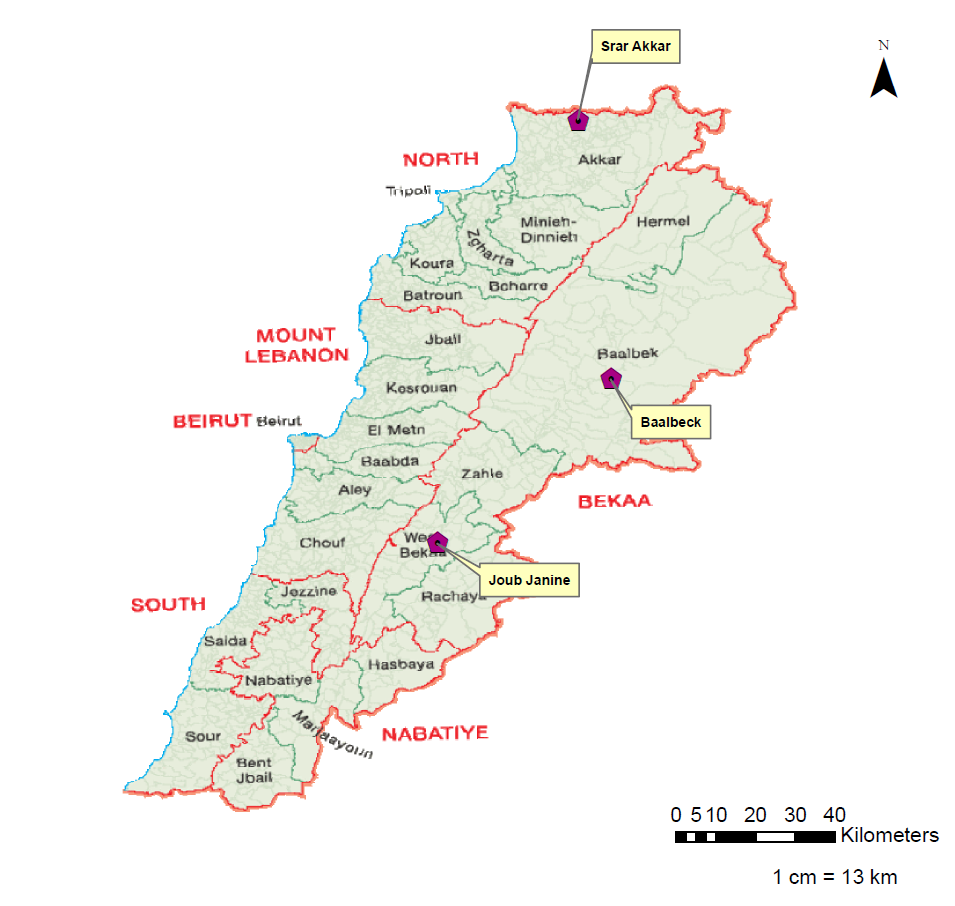
Lebanon is characterized by regional socio-economic disparities with almost 30% of the population living under the poverty line and 8% under the extreme poverty line.
Since the start of the Syrian conflict in 2011, Lebanon has witnessed a massive influx of refugees. According to the United Nations High Commissioner for Refugees, on 31.05.14, the total number of Syrian refugees in Lebanon was equivalent to 1,087,814. When the remaining refugees from the Syrian conflict are taken into account, the total number of refugees in May 2014 becomes equivalent to 1,403,718 persons.
In November 2013, the Government of Lebanon with the support of the World Bank and the United Nations prepared the “Lebanon Roadmap of Priority Interventions for Stabilization from the Syrian Conflict” based on the “Economic and Social Impact Assessment of the Syrian Conflict”.
With a resident population of 4.2 million and an average waste generation rate of 0.95 kg/capita/day, Lebanon generates about 1.57 Million tons of waste per year. Waste disposal is particularly difficult in Lebanon because of its rugged terrain and limited surface area.
Under the EU-funded program Assistance to the Rehabilitation of the Lebanese Administration (ARLA), OMSAR launched a municipal SWM program to improve the provision of solid waste services in rural areas. A new unit was created within OMSAR to manage the implementation of the €14.2 million Euros EU-funded program (to build and equip the facilities) and related investments worth $36 million US dollars from the National treasury (to operate and maintain the facilities). The program has to date financed 18 SWM activities targeting 177 municipalities representing about 1.15 Million people.
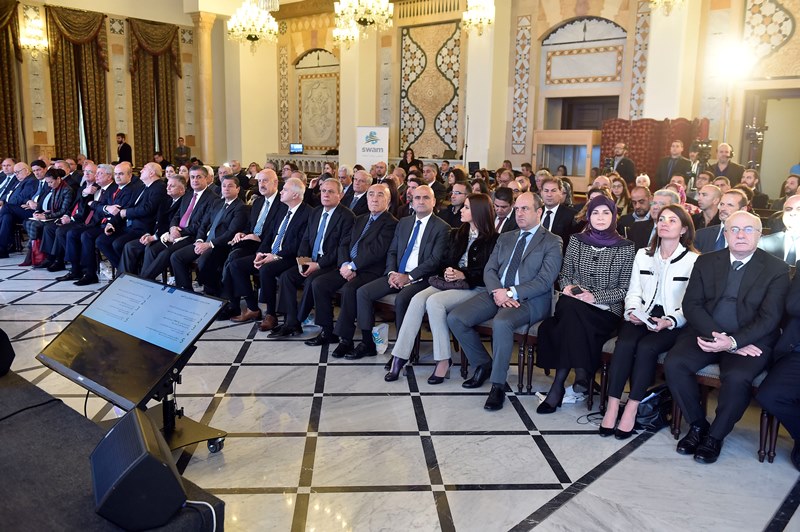
THE EUROPEAN UNION AND OMSAR LAUNCHING THE EU-FUNDED SOLID WASTE MANAGEMENT PROGRAMME IN LEBANON AT THE GRAND SERAIL